


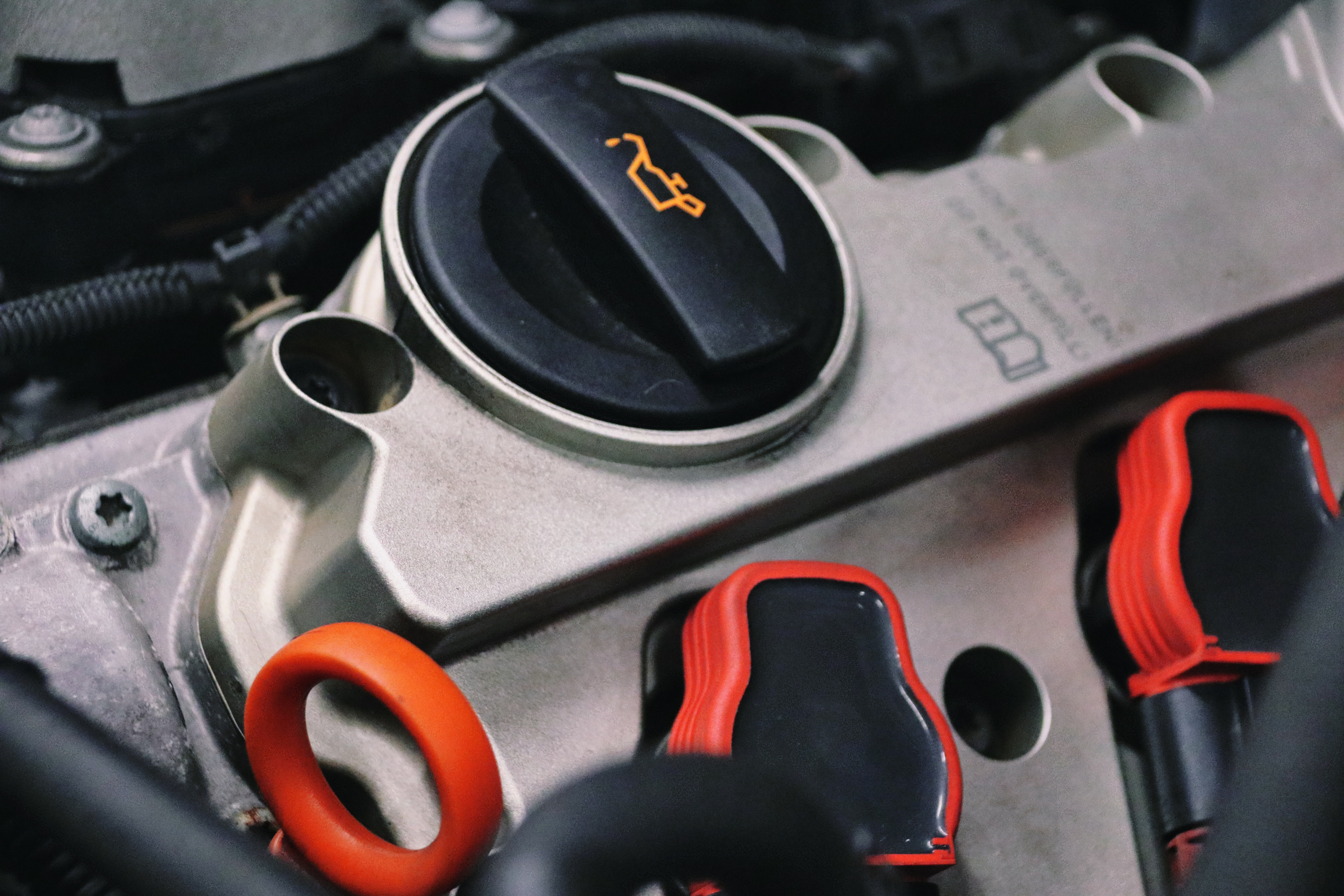
It’s the most basic item on any service schedule – the old fashioned oil change.
You know it needs doing every year, or every however many thousand miles. And you know it costs money. But have you ever stopped to wonder what’s actually going on inside your engine when that old, dark oil is drained away and replaced with fresh stuff?
WHY AN OIL CHANGE IS IMPORTANT FOR THE HEALTH OF YOUR CAR
For something that sounds so simple, an oil change service is one of the most important maintenance tasks your car needs. Get this right and stick to the schedule, and your engine could run happily for hundreds of thousands of miles.
POWERING YOUR ENGINE’S CIRCULATORY SYSTEM
If petrol is your car’s food, then think of engine oil as the blood in your car’s circulatory system.
Our blood carries oxygen, hormones, and nutrients around our bodies, while taking away waste. Engine oil has multiple jobs, too – all of them critical.
Number one, it lubricates. Your engine is a metal box full of other metal bits, all moving at high speed and under serious pressure. Pistons slide up and down inside cylinders, camshafts spin against followers, valves open and close thousands of times a minute.
Without oil, all that metal-on-metal contact would create catastrophic heat and friction. Within minutes, the engine would seize solid, destroyed beyond economic repair. Oil forms a thin film between these moving parts, letting them glide past each other with minimal resistance.
But oil also cleans. As it circulates, it picks up microscopic debris, combustion byproducts, and tiny particles worn away by normal wear and tear. These go through the oil filter, which traps them and stops them from going back through the engine.
Over time, the oil can fill up with contaminants. It becomes saturated, thick, and dark – and that’s when it needs changing.
Oil cools, too. While your radiator handles most of your engine’s thermal management, the oil helps massively – and not just by reducing friction. It splashes onto the underside of the pistons, carrying heat away from the hottest parts of the engine and dissipating it through the oil pan. In high-performance engines, dedicated oil coolers take this effect to the limit.
Last but not least – oil seals the engine. Worn or degraded oil can’t seal effectively, and this can lead to power loss and increased emissions.
WHAT HAPPENS TO OIL OVER TIME
Fresh oil is amber, almost honey-coloured, and flows like… well, oil! It’s designed to pump easily through narrow passages, even when cold, reaching critical components within seconds of startup. But it doesn’t stay that way.
Every time you drive, heat breaks the oil down. Combustion byproducts, including acids and moisture, contaminate it. Soot from diesel engines and unburnt fuel from cold starts dilute it. The additives that give modern oil its protective properties gradually get used up.
As engine oil degrades, it thickens. It becomes sludgy, and doesn’t flow like fresh oil. Contaminants can start to deposit on internal components. Eventually, the oil stops lubricating the engine effectively.
Of course, this doesn’t happen overnight. And modern oils and engines are pretty resilient. But with every mile and every start, the oil gets a little closer to the end of its useful life.
WHY REGULAR OIL CHANGES ARE IMPORTANT
Skipping an oil change isn’t going to cause some kind of catastrophic, immediate failure. You might go an extra thousand miles or two without noticing any difference. But the damage accumulates silently.
Sludge builds up in the sump, and surfaces can wear quicker without the protection of free flowing oil. Systems that rely on oil pressure can start to become unreliable. By the time you notice a problem – like a harder start or a warning light on the dash – the damage is done.
Modern engines run at high pressures, can go to extreme temperatures, and are left for longer service intervals. This already pushes engine oil to its limits. Using the wrong oil, or changing it too late, can lead to serious issues if left unchecked.
THE RIGHT OIL MATTERS
Not all oil is the same, and your car is designed to use a specific grade and spec of oil. Thicker oils maintain a stronger film under load, but they also create more drag and can reduce fuel economy. Using the wrong viscosity can affect everything from fuel consumption to engine timing. The right balance for your engine is specified by the manufacturer, and it’s incredibly important to stick to their guidelines – unless you absolutely know what you’re doing.
BEYOND THE OIL ITSELF
Every time you change the oil, you should change the filter, too. The filter traps the contaminants the oil carries, but eventually it becomes clogged. A blocked filter will send unfiltered oil back into the engine – along with all those captured contaminants.
The oil change is also an opportunity for inspection, and during your regular car servicing, your mechanic will look for signs of trouble in the oil they drain – to spot potential issues before they become major problems.
The next time you’re tempted to put off that service, or to stretch the interval just a little further, remember what’s happening inside your engine. The cost of regular car servicing and an oil change will always, always be less than the cost of a new engine.
So, don’t skip your services and inspections. Get your car service booked today, with Master Tech Autos.
BOOK YOUR CAR SERVICE
Master Tech Autos is a garage in Eastleigh that carries out car servicing for lightly modified cars and factory stock cars alike. Give us a call on 023 8061 1161 or contact us to book your next car service.
